The Unsung Guardian of Patient Safety: The World of Biopharmaceutical Quality Control (QC)
2026.07.21
The thalidomide tragedy of the 1960s is a defining historical example of the importance of scientifically verifying the safety, efficacy, and quality of medicines. Today, every injection vial and tablet used in hospitals and pharmacies reaches patients only after undergoing rigorous quality systems and testing procedures built on these historical lessons.
Biopharmaceuticals are produced using living cells, making their manufacturing processes and quality characteristics highly complex. Quality Control (QC) therefore plays a critical role in supporting patient safety and product reliability by conducting precise testing and analysis of raw materials, in-process intermediates, drug substances, and finished products.
In this article, we explore the role of QC in the biopharmaceutical industry and how Celltrion continues to strengthen its quality control capabilities to meet global quality standards.
| QC in the Biopharmaceutical Industry
QC is the process of verifying, through rigorous testing and analysis, whether raw materials, in-process intermediates, drug substances, and finished products meet predefined quality standards. It is a key component of compliance with Good Manufacturing Practice (GMP) requirements established by global regulatory agencies, such as the U.S. FDA and the European Medicines Agency (EMA), and is a fundamental requirement for regulatory approval and commercial supply.
QC plays an even more important role in biopharmaceutical manufacturing. Biopharmaceuticals are protein-based medicines produced by culturing living cells, and even subtle changes in the manufacturing environment or process conditions can affect protein structure, glycosylation patterns, impurity levels, and biological activity. Because these quality attributes can affect product efficacy and safety, advanced analytical technologies and systematic quality control are essential.
Accordingly, biopharmaceutical QC goes beyond conventional physicochemical testing. It involves a wide range of sophisticated tests and analyses, including protein aggregate analysis, glycosylation profiling, microbial contamination control, impurity analysis, and biological activity evaluation. These analytical results provide an important basis for determining whether products maintain consistent quality and can be safely administered to patients.
| Quality Control Across the Drug Lifecycle
QC plays a vital role in ensuring reliable product quality throughout the entire lifecycle of a medicine, from research and development, non-clinical studies and clinical trials to commercial production and distribution.
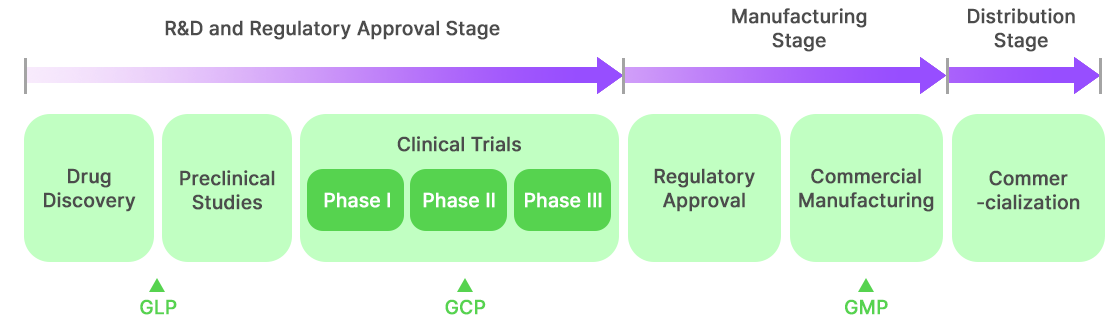
Non-clinical Stage:
helps ensure the reliability and integrity of early research data through instrument calibration, sample management, verification of test method suitability, and data recording and management. The data generated at this stage serves as the scientific foundation for subsequent clinical trials and regulatory approval strategies.Clinical Stage:
focuses on the comprehensive management of trial design, participant protection, sample handling, reliability of analytical results, and data quality. Through these activities, the safety and efficacy of drug candidates are evaluated in a scientific and ethical manner.- Commercial Production and Distribution Stage:
verifies that products are consistently manufactured in accordance with approved quality standards through raw material testing, in-process testing, drug substance (DS) and drug product (DP) testing, stability testing, environmental monitoring, and documentation. It also involves the continuous management of storage conditions and stability data to help maintain product quality throughout distribution.
| QC vs. QA
Although QC (Quality Control) and QA (Quality Assurance) are often discussed together in pharmaceutical quality management, they serve distinct roles and functions.
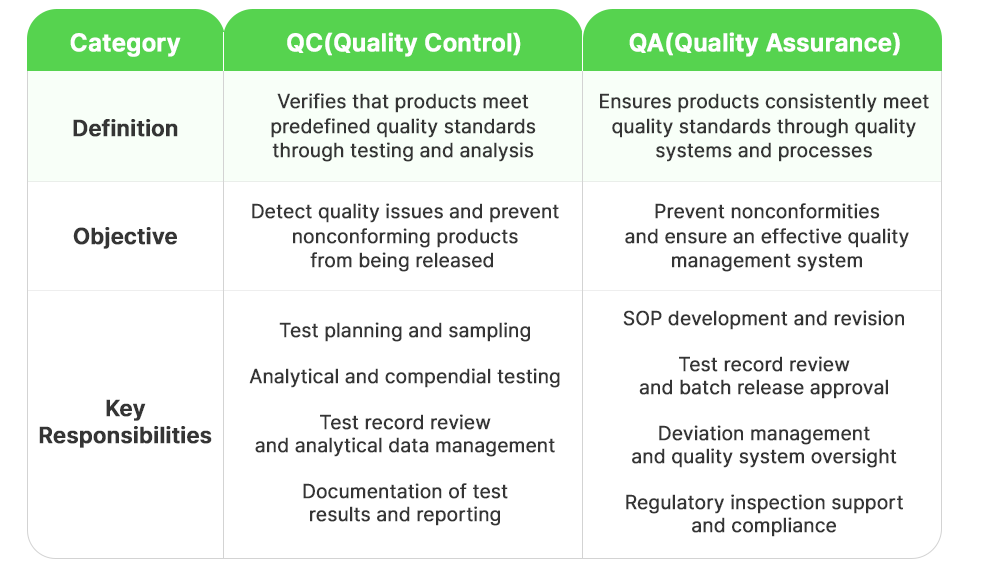
- QC: Verifying Quality through Testing and Analysis
QC performs physical, chemical, and biological tests on samples collected at each stage of the manufacturing process to verify that raw materials, intermediates, drug substances, and finished products meet established quality standards.
- QA: Ensuring Quality through Systems and Procedures
QA designs, implements, and maintains the quality management system for pharmaceutical manufacturing and quality control. It prevents nonconformities and ensures consistent product quality by overseeing all aspects of the quality system, including SOP development, manufacturing and test record review, deviation management, change control, and CAPA management, training, audit readiness and support, and batch release.
While QC directly verifies product quality through test results, QA ensures that these quality-related activities are performed consistently in accordance with established procedures and within a well-defined quality management system. A robust pharmaceutical quality system depends on the effective integration of both functions.
| Celltrion’s QC Capabilities
Celltrion ensures the quality and reliability of its biopharmaceuticals through a robust quality system that meets global regulatory standards and advanced analytical capabilities. In particular, to evaluate the complex quality attributes of biopharmaceuticals, including antibody therapeutics, Celltrion conducts systematic quality control using state-of-the-art analytical instruments and the expertise of highly skilled professionals.

End-to-End In-House QC and Comprehensive Quality Attribute Management:
Celltrion systematically performs QC testing across key manufacturing stages, from cell culture to drug substance and finished product manufacturing. Based on product-specific characteristics and regulatory requirements, it manages a comprehensive range of quality attributes while maintaining an end-to-end quality control system from raw materials to finished products.High-Precision Analytical Capabilities for Biopharmaceuticals:
QC for antibody therapeutics requires comprehensive evaluation of multiple quality attributes, including protein structure, charge variants, purity, impurities, glycosylation profiles, and biological activity. Celltrion delivers highly reliable analytical results through advanced analytical infrastructure and specialized expertise, including High-Performance Liquid Chromatography (HPLC), Ultra-Performance Liquid Chromatography (UPLC), mass spectrometry, electrophoresis, and cell-based bioassays.- Data Integrity-Driven Quality Control:
Celltrion continuously enhances its systems — including electronic data management, test record management, sample tracking, and instrument data management — to ensure the reliability of quality data. These efforts strengthen the traceability of testing processes, minimize human error, and align with data integrity principles required by global regulatory authorities.
| The Future of QC: Digital Transformation and Smart QC
Pharmaceutical quality control is rapidly evolving through digitalization and automation. Smart QC Labs are transforming quality control by integrating laboratory-generated data, automating repetitive tasks, and enhancing the efficiency and reliability of analytical workflows.
LIMS (Laboratory Information Management System):
A system for managing end-to-end laboratory operations, including sample receipt, test assignment, results management, and report generation. It enables efficient tracking of testing progress while helping standardize laboratory workflows.SDMS (Scientific Data Management System):
A system that automatically collects, integrates, and manages data generated by laboratory instruments. It helps minimize data loss and manual transcription errors while improving the traceability and accessibility of raw data.- CDS and Electronic Record Systems:
Chromatography Data Systems (CDS) and electronic laboratory record systems electronically manage the generation, processing, review, and approval of analytical data. These systems strengthen data integrity while improving the efficiency and consistency of test result review.
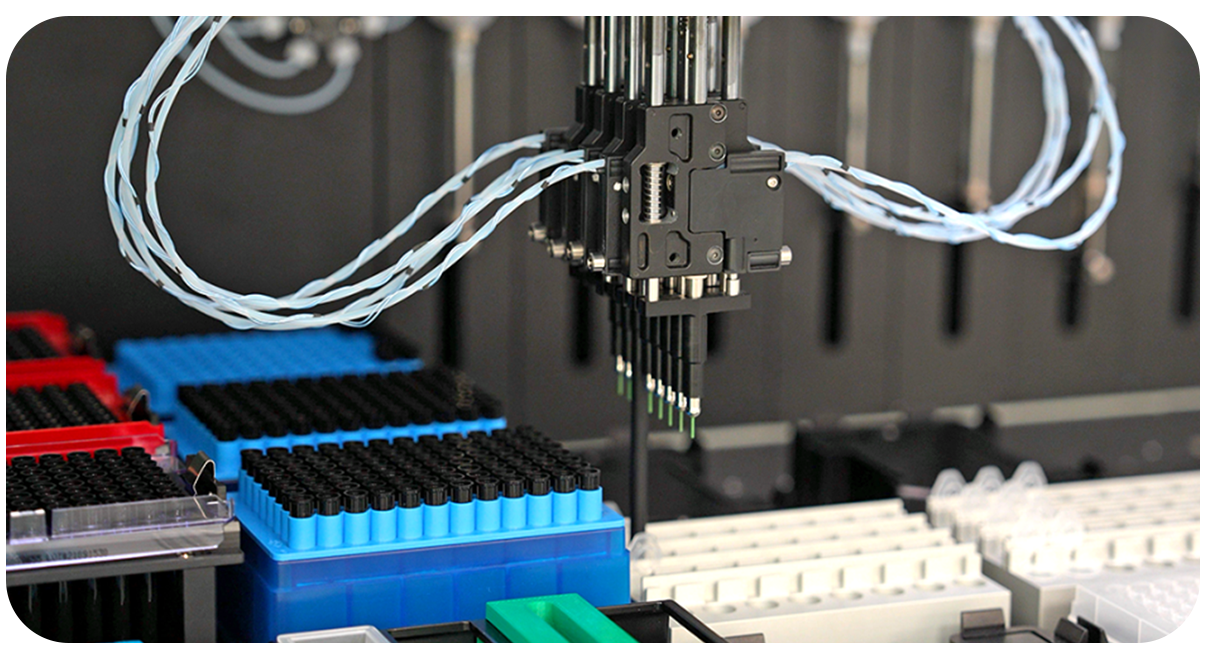
Celltrion plans to further expand the adoption of automation technologies, including Liquid Handling Systems. By automating repetitive and manual laboratory processes, the company aims to create an environment where highly skilled professionals can focus on higher-value activities such as advanced analytical work, data interpretation, and quality risk assessment.
As biopharmaceuticals directly affect patients’ lives and health, QC is more than a process for meeting regulatory requirements. It provides the scientific foundation for verifying product safety, efficacy, and consistency, helping ensure the delivery of medicines that patients can trust.
Building on its world-class quality control capabilities and commitment to continuous digital innovation, Celltrion will continue its efforts to provide patients with safe and effective biopharmaceuticals.