Chronic Inflammation That Attacks Your Body: A Guide to Rheumatoid Arthritis, from Symptoms to Treatment
2026.07.21
As societies continue to age and environmental factors evolve, interest in autoimmune diseases has grown significantly. Among these conditions, Rheumatoid Arthritis (RA) is one of the most common. Although it is often mistaken for degenerative osteoarthritis associated with aging, RA is a chronic, progressive autoimmune disease that can lead to severe joint deformity and physical disability if left untreated.
With the number of patients steadily rising worldwide, understanding the underlying disease mechanisms and receiving timely treatment are more important than ever. In this article, we explore everything from the causes of rheumatoid arthritis to the shift in treatment paradigms driven by advances in biopharmaceuticals.
| A Warning Sign of Immune System Dysfunction: What is Rheumatoid Arthritis?
Rheumatoid arthritis is an autoimmune disease in which the immune system, instead of protecting the body from external threats, mistakenly attacks healthy tissues—particularly the joints.
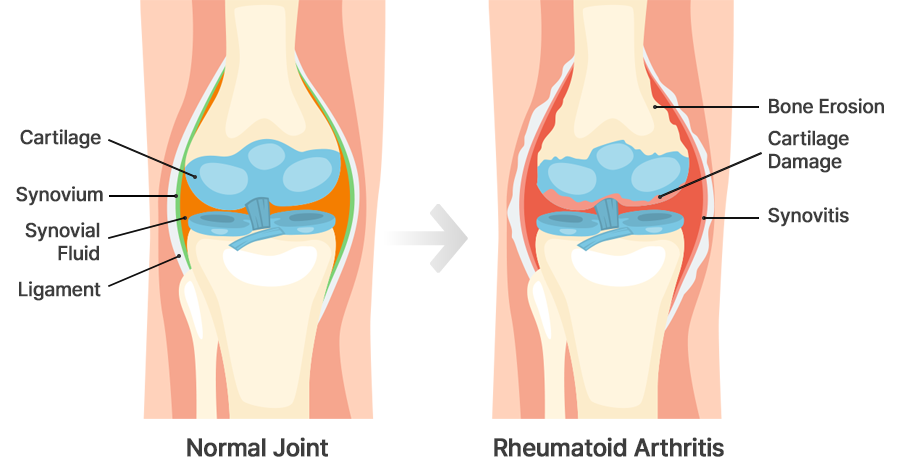
In healthy joints, cartilage cushions the space between bones, and synovial fluid produced by the synovial membrane (synovium) enables smooth movement. However, in patients with RA, abnormal autoimmune responses trigger persistent inflammation of the synovium. Over time, this chronic inflammation causes the synovium to progressively thicken, eventually eroding the surrounding cartilage and bone. In more severe cases, it can also damage tendons and ligaments, ultimately resulting in joint deformity and stiffness.
One of the hallmark early symptoms of rheumatoid arthritis is morning stiffness, in which the joints feel stiff upon waking and the stiffness may last for more than an hour. It typically begins in the small joints, such as the fingers, toes, and wrists, and gradually improves with movement during daily activities.
| Rheumatoid Arthritis vs. Osteoarthritis: Symptoms and Key Differences
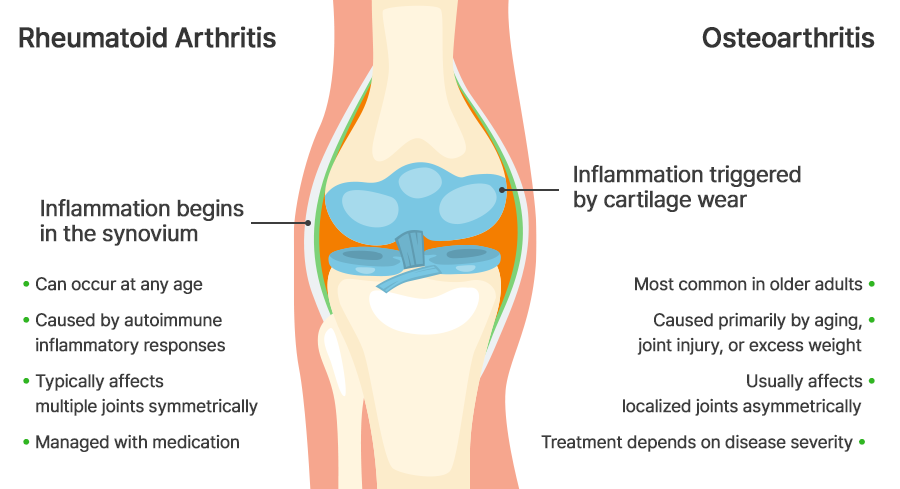
Many people confuse rheumatoid arthritis with osteoarthritis. However, these two conditions differ significantly in their underlying causes, commonly affected joints, and typical age of onset.
Category | Rheumatoid Arthritis (RA) | Osteoarthritis (OA) |
Cause | Chronic inflammation driven by an abnormal immune response | Cartilage wear and tear caused by genetic factors, obesity, joint injury, and overuse |
Age Group | All age groups, including younger adults in their 30s to 50s | Primarily middle-aged and older adults (typically aged 50 or older) |
Affected Joints | Predominantly peripheral joints (e.g., fingers, toes, and wrists) | Predominantly weight-bearing joints (e.g., knees, spine, and hips) |
Pattern | Symmetrical, affecting joints on both sides of the body | Asymmetrical, typically affecting one joint or one side of the body |
A common symptom shared by both rheumatoid arthritis (RA) and osteoarthritis (OA) is morning stiffness, in which the joints feel stiff and painful upon waking. However, in osteoarthritis, the stiffness—often accompanied by difficulty making a fist—typically improves within 20 to 30 minutes. In contrast, in rheumatoid arthritis, pain and stiffness may persist for more than an hour or even throughout the day.
If left untreated, rheumatoid arthritis can lead to joint deformity, and in severe cases, joint function may be significantly impaired. In addition, inflammatory substances can travel through the bloodstream and cause chronic complications in major organs, such as the lungs and heart. Early diagnosis and timely treatment are therefore essential to help prevent disease progression.
| Treatment Approaches and the Introduction of Biologics
Since rheumatoid arthritis is a chronic autoimmune disease with no definitive cure, the primary goal of treatment is to suppress inflammation, relieve pain, and prevent joint damage, thereby inducing and maintaining remission. Treatment strategies are broadly categorized into conventional drug therapies, biologic therapies, and surgical interventions.
1. Initial Treatment with Conventional Medications
NSAIDs (Nonsteroidal Anti-Inflammatory Drugs) & Corticosteroids:
Used to rapidly alleviate acute pain and inflammation during flare-ups. However, because of the potential for side effects with long-term use, they are generally limited to short-term symptom control.- Conventional DMARDs (Disease-Modifying Anti-Rheumatic Drugs):
These are the cornerstone first-line treatments prescribed to help slow disease progression by suppressing the underlying autoimmune response.
2. Biologic Therapies
With rapid advances in biopharmaceutical technology since the 2000s, biologic therapies have become an important treatment option for patients who do not respond adequately to conventional DMARDs or have high disease activity.
Among these therapies, TNF-α inhibitors are one of the most widely used treatment options. They use antibodies that selectively bind to and neutralize tumor necrosis factor-alpha (TNF-α), a key signaling protein that promotes inflammation. This helps interrupt the inflammatory cascade, slow osteoclast activity, and prevent joint damage while reducing pain.
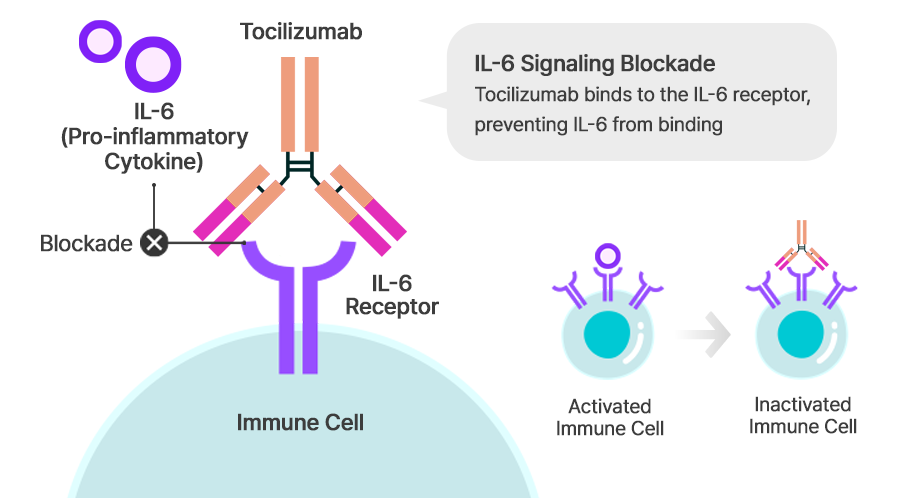
Another widely used biologic therapy is tocilizumab, an interleukin inhibitor that targets interleukin-6 (IL-6), another cytokine that plays a central role in inflammation. Tocilizumab binds to IL-6 receptors, blocking inflammatory signaling pathways and helping reduce joint inflammation and stiffness. Together with TNF-α inhibitors, it offers a broader range of treatment options tailored to each patient's condition and treatment needs.
3. Surgical Treatment
Arthroscopic Synovectomy (Early to Mid-stage):
Considered for removing severely inflamed synovial tissue to help reduce pain and swelling and improve joint function.- Total Joint Replacement (Advanced Stage):
Considered when joint damage cannot be adequately restored, replacing the damaged joint with an artificial joint to help improve physical function.
| Innovations in Biotechnology to Improve Treatment Accessibility
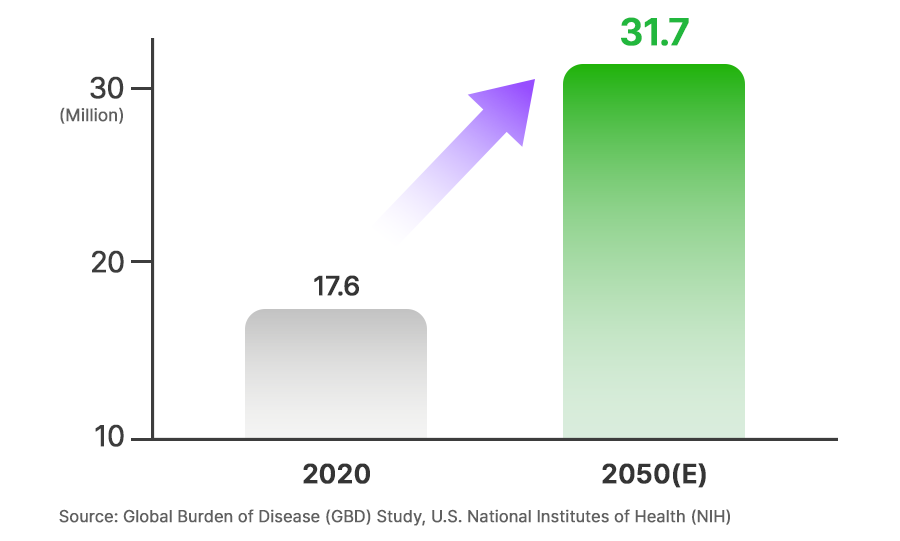
According to the Global Burden of Disease (GBD) study published in the National Library of Medicine (NLM), part of the U.S. National Institutes of Health (NIH), the number of people living with rheumatoid arthritis worldwide is projected to continue increasing due to factors such as population aging, reaching approximately 31.7 million by 2050. As the number of patients continues to grow, ensuring treatment accessibility—so that patients can receive timely treatment without undue financial burden—has long been a major challenge for the global healthcare community.
While high-cost original biologics once presented a steep financial barrier for patients, the introduction of biosimilars—which have demonstrated comparable efficacy and safety to their reference biologics while offering a more affordable treatment option—has significantly improved access to treatment.
Celltrion recognized the potential of the autoimmune disease treatment field early on and successfully introduced the world's first monoclonal antibody biosimilar for autoimmune diseases to the global market, helping drive a paradigm shift in the biologics market. This innovation has expanded access to broader and more affordable treatment options for patients with rheumatoid arthritis worldwide.
| Beyond Medication: Managing Rheumatoid Arthritis in Everyday Life
In the management of rheumatoid arthritis, patient-led daily care and a good understanding of the disease are just as important as drug therapy.

Many patients tend to limit their movement and rely primarily on rest due to concerns about joint pain and deformity. However, except during acute flare-ups accompanied by joint swelling and warmth, regular exercise is essential. When joints are not used for prolonged periods, the surrounding muscles become weaker, which can further accelerate joint stiffness and deformity.
Therefore, once inflammation is under control, patients are encouraged to combine low-impact aerobic exercises—such as swimming, stationary cycling, or walking on flat surfaces—with gentle stretching to help maintain joint range of motion.
Additionally, patients may stop taking their medication on their own once their symptoms visibly improve. However, because rheumatoid arthritis has no cure, treatment should be continued even after reaching remission, when symptoms may appear to have disappeared. If stable remission is maintained for at least six months to one year, treatment may be gradually tapered under the guidance of a specialist by extending the dosing interval or reducing the dose.
As a global leader in autoimmune diseases, Celltrion remains committed to advancing research and development to help patients live with less pain and regain a better quality of life.